

New Orleans is in the midst of a critical chapter for its city infrastructure. Between long-delayed projects, budget pressures, and demands from residents, what was once background noise has become front-page concerns. Here’s a look at several critical areas currently shaping conversations at City Hall and in our neighborhoods.
Aging Water & Drainage Systems: Risks and Real Stories
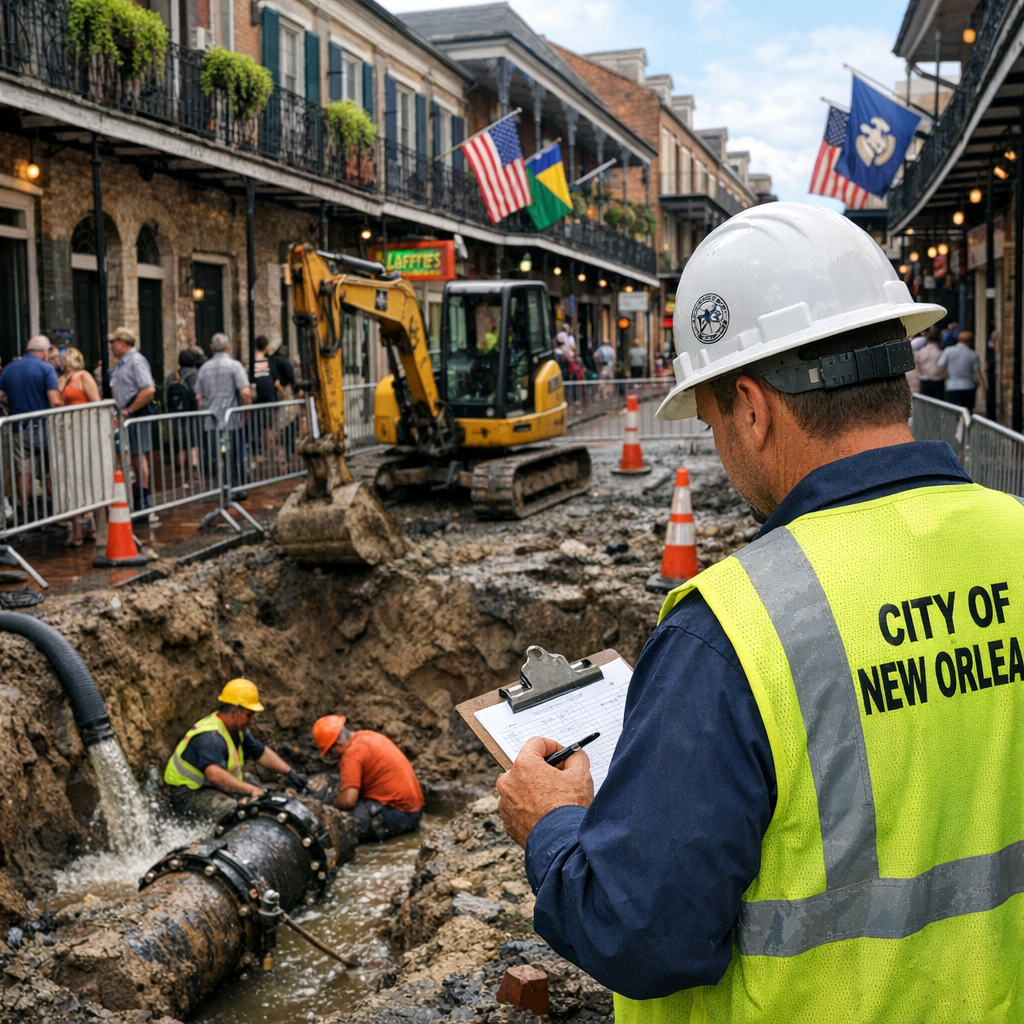
Water mains more than a century old in the French Quarter are being replaced in a major project that also includes drainage upgrades and catch basin repairs. Though necessary, these works have deeply impacted daily routines for residents and businesses. Leaders say the infrastructure—a critical bloodline of the city—must be modernized before failures become disasters. (SWBNO).
These efforts come amid recurring water line breaks elsewhere, plus streets that flood during even moderate rainfall. Those incidents aren’t just annoyances—they expose persistent vulnerabilities—particularly in parts of town long neglected by city investment.
The Push for Stormwater Fee Reform and Sustainable Funding
City officials are exploring new ways to fund drainage and drinking water infrastructure through property-based stormwater fees. The goal: a steady revenue stream to support both maintenance and upgrades, with a focus on approaches that are fair and equitable.
Local advocacy groups are playing key roles here, shaping proposals and pressuring for policies that ensure under-resourced neighborhoods are included—not left behind.
Project Updates: Wins, Bottlenecks, and What’s Ahead
The “Connecting New Orleans East” project proposes major improvements along I-10’s service roads—adding lighting, shared-use paths, pedestrian signals, and better crosswalks. The process is community-driven, with public meetings, walking audits, and stakeholder input guiding where improvements happen first. Preliminary design is expected to wrap by this winter. (DPW).
On the flip side, the planned extension of the Lafitte Greenway has been delayed. The city recently cut about $35 million from infrastructure project budgets amid fiscal shortfalls, postponing some critical work. It’s a clear example of how money—and where it goes—is a limiting factor for civic ambition. (City budget reports).
What Residents Want: Priorities, Pain, and Possibility
When asked, locals consistently cite safe, affordable housing; solid infrastructure; public health; and youth services as top priorities. While crime remains a concern, many say visible, fundamental conditions—like clean water, reliable street lighting, and streets that don’t turn into rivers during rain—are what shape daily life. (Big Easy Budget Coalition surveys).
For many, the promise of bold infrastructure projects feels within reach. But trust depends on follow-through, transparency, and equitable distribution of both the burdens and the benefits.
Opportunities for Meaningful Action
New Orleans is using tools like the Infrastructure Coordination Committee, which brings together city agencies and utility partners to plan and sequence maintenance in a shared way, aiming to synchronize construction and reduce disruptions.
Fiscal tightening has forced tough choices. But some leaders see this as a chance to set stronger standards, adopt sustainable funding mechanisms, and ensure every neighborhood is included in progress.
Residents interested in following or contributing to these issues should keep an eye on public meetings, budget hearings, and city dashboards that map infrastructure work. The work is ongoing—and what happens in the next few months could make a difference for years to come.