

By Lindsey Robinson
Budget Pressure: 2027 Takes Shape
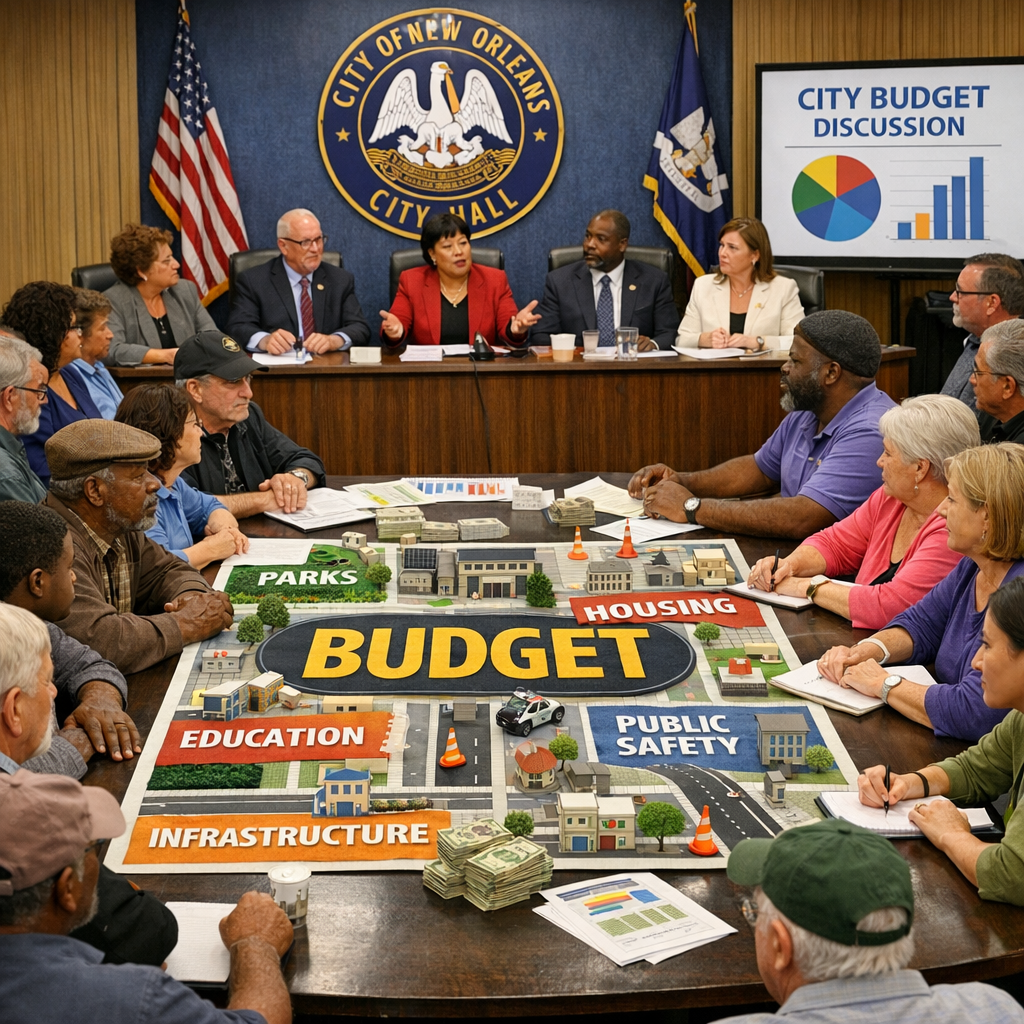
The City of New Orleans is preparing its 2027 operating budget amid widespread concern about fiscal stability. In June, Mayor Helena Moreno’s administration proposed a $110 million medium-term loan to help close a budget gap and avoid a short-term revenue‐anticipation note crisis. This step underlines the urgency to address revenue shortfalls and strengthen financial management across city departments. Investors and residents alike are watching closely. Public hearings and budget survey forums throughout districts are now underway.
(June 2026)
What to Know & Weigh In
- Public feedback is being solicited to prioritize resources—what residents most want based on their neighborhoods.
- Proposed millage (property tax) changes require a public hearing by November 5, 2026.
- Departments are submitting requests for capital and operating budgets in line with the City Planning Commission’s 2027-2031 Capital Improvement Plan review.
Homelessness: Scaling Local Response
Homelessness continues to be a critical issue for New Orleans. The city’s Office of Homelessness Services and Strategy, alongside UNITY (the Continuum of Care lead), is implementing the Home for Good plan to reduce unsheltered homelessness via rapid outreach, shelter-to-housing pathways, and stronger public-private funding alignment. Learning from successes—and gaps—is central to the strategy.
Coupled with that, health agencies are working to link homelessness with public health impacts. Weekly encampment cleanups and partnerships involving healthcare providers, mental health outreach, and hygiene services aim to protect both unsheltered individuals and broader community health.
Infrastructure: From City Streets to Drainage Systems
New Orleans isn’t just talking budget; it’s investing in infrastructure renewal. The Department of Public Works and Sewerage & Water Board are teaming up through the Joint Infrastructure Recovery Request (JIRR) program to repair streets, upgrade storm drains, and install ADA-compliant infrastructure across neighborhoods. The Audubon Group C project is one example—lasting four blocks with underground utilities, sidewalks, and improved drainage.
The Sewerage & Water Board also continues work to replace aging transmission mains, overhaul treatment plants, and modernize systems such as billing, finance, and asset management. The goal is more reliable water delivery, cleaner sewer operations, and better transparency.
These Issues Intersect
The budget squeeze means hard decisions ahead—both on services to permanently address homelessness and on maintaining infrastructure. Cuts in one area ripple into another: underfunded drainage systems can worsen flooding, homelessness services cost more during disasters, and deferred maintenance worsens financial burdens over time.
How to Stay Engaged
Here are ways residents can follow and influence decisions:
- Participate in upcoming public hearings for the 2027 budget and 2027-2031 Capital Improvement Plan.
- Submit feedback via the city’s budget survey—priorities from all districts matter.
- Track performance reports from SWBNO and Public Works via their regular operations or project-specific updates.
- Keep tabs on HOME for Good plan updates from the Office of Homelessness Services & Strategy.
New Orleans stands at a crossroads: decisions made now on how to balance the budget, address housing insecurity, and modernize crumbling infrastructure will shape quality of life for years. Residents have a voice—this is the moment to raise it.